Modern homes are richer in technology than ever before — lighting, climate control, blinds, security systems, energy monitoring and media all contribute to comfort, efficiency and everyday convenience.
As homes grow more capable, many homeowners begin looking for a simpler way to bring everything together. Home Assistant is designed for exactly this purpose — when engineered and supported properly. Not as a collection of gadgets, but as a professional, local-first automation platform that unifies a home into one coherent system.
Home Assistant is a central automation platform that allows different systems in your home to operate together as one.
Instead of managing lighting, air-conditioning, blinds, security, energy and media through separate apps, Home Assistant provides a single interface and shared logic that connects them. Rather than focusing on individual devices, Home Assistant focuses on how the home behaves as a whole.
Homeowners experience this through:
At its core, Home Assistant acts as the coordinating layer of the home — receiving information, making decisions, and triggering actions across systems in a consistent, predictable way.
Home Assistant is often described as open-source software, but that description doesn’t fully reflect how it’s used in professionally designed homes.
When engineered correctly, Home Assistant functions more like:
It runs on dedicated hardware inside the home, rather than being tied to a single manufacturer’s cloud service.
This design allows the system to be shaped around the home itself — its layout, its usage patterns, and its future plans.
Yes — Home Assistant itself is free to use.
There are no licence fees required to run the platform locally, and no obligation to commit to a proprietary ecosystem in order to access core functionality.
This gives homeowners flexibility in how they invest.
Rather than paying ongoing software fees, the focus can be placed on:
Home Assistant provides the foundation.
Professional engineering ensures the system performs smoothly over time.
Many modern smart home systems make use of cloud services, which can be convenient and accessible. Home Assistant takes a complementary approach by operating locally within the home, with optional remote access when needed.
This local-first design offers several benefits.
Core automations continue running regardless of internet conditions, ensuring the home behaves consistently day to day.
Local automations respond immediately, creating a smooth, natural interaction with the home.
System data remains inside the property, giving homeowners clarity and control over how their home operates.
For homes that value stability, responsiveness and discretion, local control provides a strong foundation.
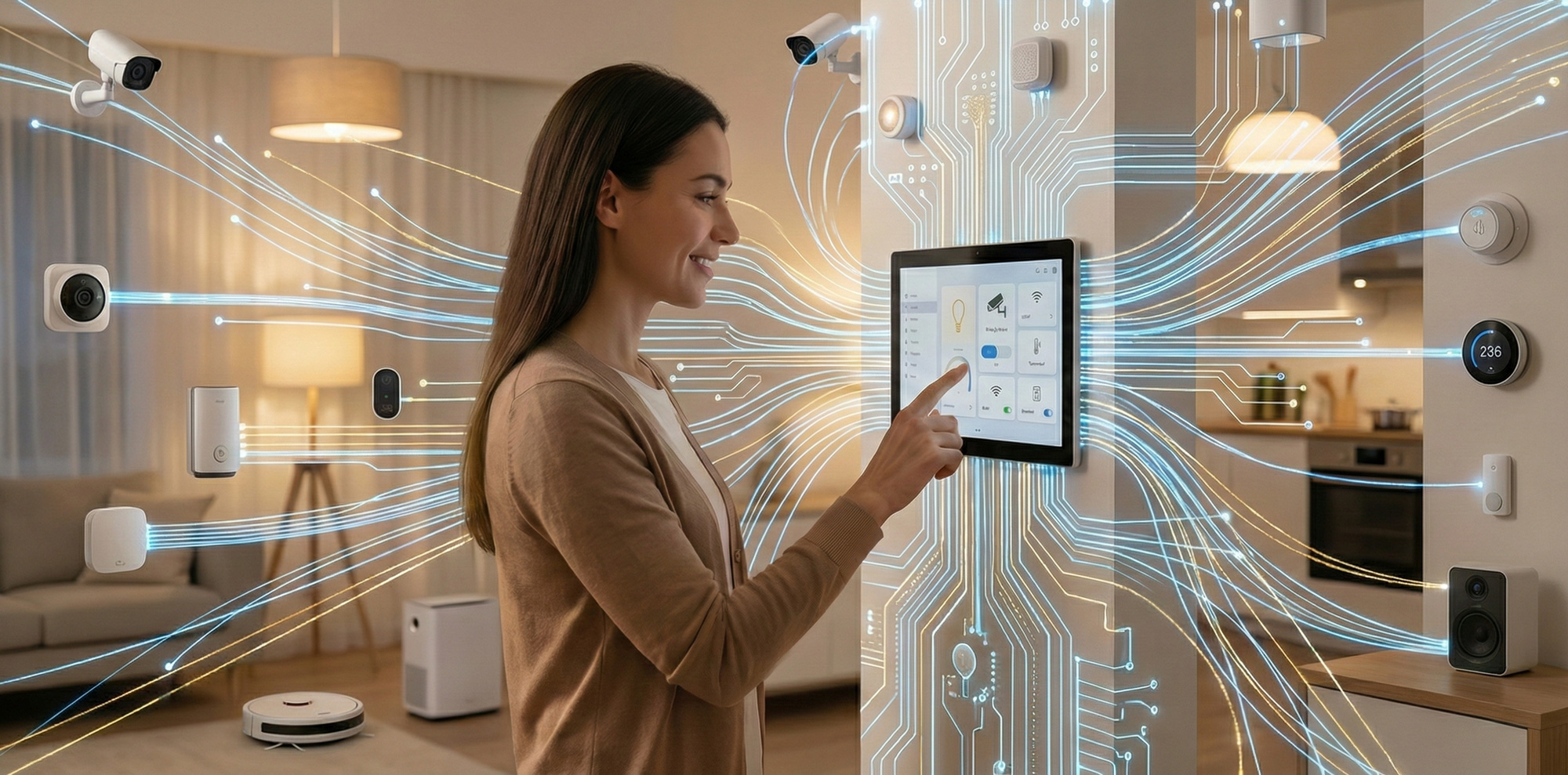
Home Assistant is designed to unify key home systems into a single, coordinated experience.
Rather than treating each technology in isolation, it allows systems to work together in a way that feels natural, predictable, and easy to live with.
Below are the primary areas where Home Assistant delivers the greatest impact, when thoughtfully designed and supported.
Lighting becomes a coordinated system rather than a collection of switches and apps.
Rooms and zones can adapt naturally to time of day, occupancy, and lifestyle preferences, with scenes that support everyday routines and special moments alike.
Heating and air-conditioning systems can work together with schedules, occupancy, and environmental conditions to maintain comfort efficiently.
Temperature control becomes more consistent and responsive, without requiring constant manual adjustment.
Automated blinds and curtains can respond intelligently to sunlight, temperature, and time of day.
This supports comfort, privacy, and energy efficiency while allowing the home to feel calm and balanced throughout the day.
Security systems such as cameras, motion sensors, alarms, and access control can be integrated into the wider home environment.
Rather than operating separately, security becomes part of a cohesive system that supports awareness, peace of mind, and informed control.
Solar, battery storage, and energy monitoring can be integrated into daily automation.
This enables greater visibility into energy use and allows the home to make smarter decisions about when and how energy is consumed.
Audio and visual systems can be included in scenes and routines, creating a seamless entertainment experience.
Media becomes part of the home’s overall behaviour, rather than something that needs to be managed separately.
Voice control and intuitive interfaces can provide simple, natural ways to interact with the home.
Used thoughtfully, these interfaces enhance convenience while keeping the underlying system organised and consistent.
The real value isn’t in any single system — it’s in how they work together.
Home Assistant provides a flexible platform that allows these systems to be designed as one coherent whole, evolving gracefully over time as needs change and technology advances.
The value lies in coordination, not complexity.
Home Assistant is a powerful platform, and like any advanced system, its performance depends on how it is designed and implemented.
A well-engineered system considers:
When these elements are thoughtfully addressed, the technology fades into the background — supporting daily life without demanding attention. This is why Home Assistant aligns so well with a consultancy-led approach, where systems are designed around the home and its occupants, not around individual products.
A unified automation platform works best when there is clarity around design, implementation and ongoing care.
When lighting, climate, security, energy and media are coordinated through one system:
Home Assistant enables this unified approach — particularly when paired with professional design, installation and long-term stewardship.
Home Assistant is not about adding more technology to your home. It's about bringing existing technology together into a calm, cohesive system.
When engineered and supported properly, it offers:
The platform provides the capability.
Good engineering unlocks its full potential.