Most homes that are described as unreliable are not suffering from bad technology. They are suffering from the absence of system design.
Dropouts, delays, unresponsive scenes, and inconsistent behaviour almost always come from the same root causes:
In other words, the home was assembled. It was never engineered.
Modern smart home products are remarkably capable. Lighting systems are stable. Sensors are accurate. Automation platforms are powerful. Networking hardware is far better than it was even five years ago.
But none of that matters if the underlying system is flawed.
A reliable smart home behaves more like infrastructure than consumer electronics. It requires:
You would never design a commercial building by picking random components and hoping they work together. Homes deserve the same discipline.
The biggest mistake homeowners make is trying to fix reliability after the fact.
They start with devices. When those misbehave, they add repeaters. When that fails, they swap brands. Over time, the home becomes more complex, not more stable.
Engineering works in the opposite direction.
Reliable systems are built from the ground up:
This is how reliability is achieved in industrial environments. It is no different in residential ones.
Homeowners are often pulled into debates about which platform is "best." Open versus closed. Premium versus DIY. Brand A versus Brand B.
These conversations are mostly distractions.
A well-engineered system built on modest hardware will outperform an expensive system installed without structure. Conversely, even the best products will fail when layered onto a weak foundation.
The right question is not "Which product should I buy?"
It is "How should this system be designed?"
This is where most smart home providers fall short.
Electricians install devices. Retailers sell gadgets. High-end integrators sell ecosystems. Very few take responsibility for long-term system behaviour.
Engineering-led reliability requires:
It is not flashy. It is methodical. And it works.
This philosophy is core to how Ascot Smart Tech approaches every project: reliability is engineered deliberately, not promised in marketing copy
If your smart home feels fragile, fragmented, or unpredictable, the solution is rarely another product.
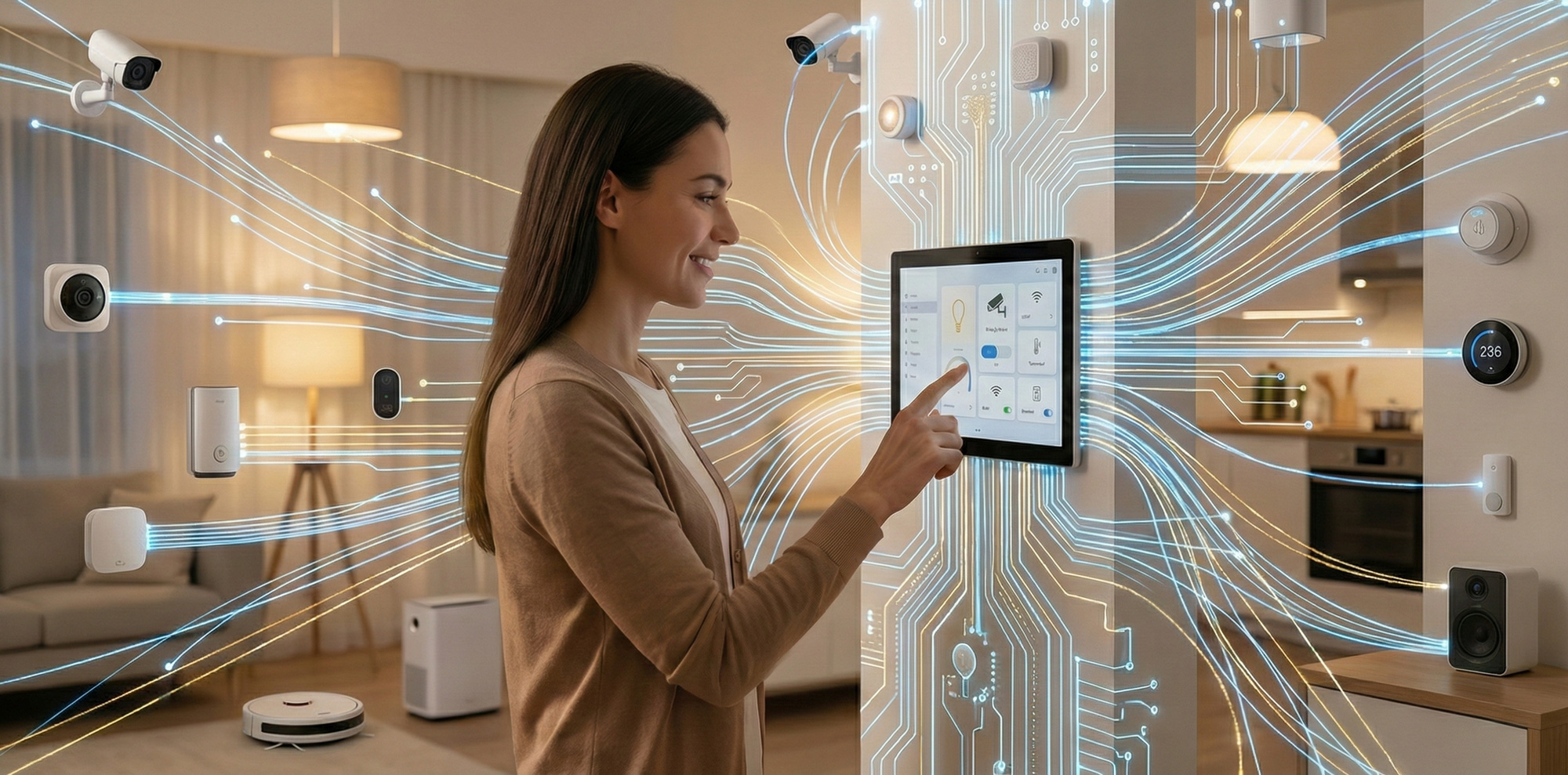
The solution is stepping back and treating the home like a system.
One system.
One architecture.
One accountable expert.
That is how reliability is achieved. And once it is engineered properly, the technology finally fades into the background where it belongs.