Guides
27.01.2026

Vendor Lock-In: The Smart Home Mistake You Cannot Undo

Why proprietary smart home systems cost more, age poorly, and quietly remove your ability to change course.

Many smart home systems promise simplicity, elegance, and peace of mind. What they rarely explain is the long-term trade-off hiding beneath that promise. Vendor lock-in is one of the most common and irreversible mistakes homeowners make when upgrading their home technology. Once you are inside a closed ecosystem, your choices, costs, and future flexibility are no longer fully yours. This article explains what vendor lock-in really means, how it happens, and how to avoid it before it is too late.

Vendor Lock-In Explained (Without the Sales Spin)

Vendor lock-in occurs when your smart home system is built around a single manufacturers proprietary platform. That platform controls how devices connect, how automations work, who can service the system, and what upgrades are allowed.

At first, this often feels reassuring. One brand. One app. One installer. Everything looks polished and intentional.

The problem is not how these systems work on day one. The problem is how little control you retain on day one, and how expensive that becomes over time.

Once locked in, you are typically dependent on:

  • Approved hardware only
  • Licensed installers only
  • Ongoing software or cloud subscriptions
  • Manufacturer pricing and product lifecycle decisions

If any of those change, you change with them, whether you want to or not.

How Homeowners Get Locked In (Usually Without Realising)

Vendor lock-in is rarely presented as a downside. It is usually framed as simplicity or reliability.

Common entry points include:

  • High-end AV or smart home packages sold as a complete solution
  • Renovation or new-build recommendations made under time pressure
  • Showroom demos that prioritise appearance over architecture
  • Claims that mixing brands will cause instability

In many cases, homeowners are not told that:

  • Adding non-approved devices later may be impossible
  • Switching platforms can require a full system replacement
  • Only specific companies are allowed to service or modify the system
  • Licensing fees may increase after installation

By the time these limitations surface, the walls are closed, the system is commissioned, and the cost to reverse course is significant.

The Real Cost of Proprietary Ecosystems

Vendor lock-in rarely hurts upfront. It hurts gradually.

Over time, homeowners often experience:

  • Rising costs for minor changes or additions
  • Forced upgrades when older hardware is discontinued
  • Limited innovation due to slow platform development
  • Difficulty integrating newer technologies like energy monitoring or advanced automation
  • Reduced resale appeal for buyers who do not want a locked system

In the worst cases, homeowners are faced with a choice between living with an ageing system or paying to rip it out entirely.

This is not a technology problem. It is an architecture problem.

Open Ecosystems: What They Are and Why They Matter

An open smart home ecosystem is built around interoperability rather than brand loyalty.

Instead of locking everything to one manufacturer, open systems:

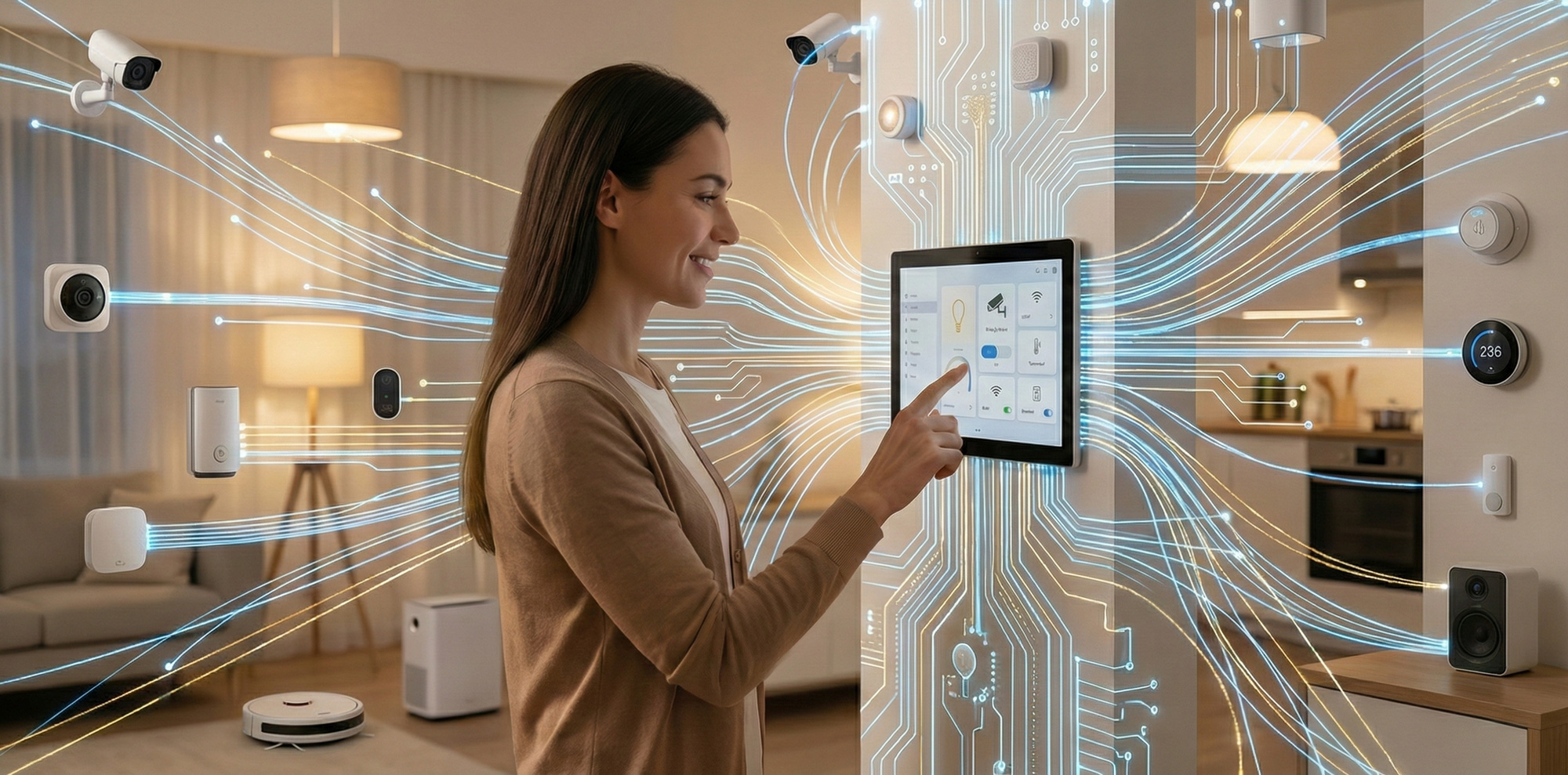
  • Allow devices from multiple brands to work together
  • Prioritise standards and local control
  • Separate the automation logic from the hardware itself
  • Can be serviced and expanded by more than one specialist

This approach treats the home as a long-term system, not a product bundle.

Open does not mean DIY or unreliable. When engineered properly, open systems are often more stable because they are not dependent on a single vendors cloud, roadmap, or licensing model.

Why Open Systems Age Better

Homes change. Technology changes faster.

Open systems are designed with that reality in mind.

Benefits include:

  • The ability to replace individual devices without replacing the whole system
  • Freedom to adopt better products as they become available
  • Local operation that continues working even if the internet is down
  • Long-term serviceability independent of any one manufacturer

Most importantly, open systems preserve homeowner agency. You remain in control of how your home evolves.

The Question to Ask Before Any Smart Home Upgrade

Before committing to any platform or installer, ask one simple question:

"If I want to change this in five years, what will it cost and who can do it?"

If the answer is vague, restrictive, or uncomfortable, you are likely being sold a closed system.

A well-designed smart home should feel invisible in daily life and flexible over decades. If flexibility is not part of the design brief, lock-in is already underway.

Engineering First, Lock-In Never

At AST, system architecture matters more than brand names.

We design smart homes the same way we design any critical system:

  • Stable foundations first
  • Clear separation between infrastructure and functionality
  • Open platforms that protect long-term choice
  • No dependency on a single vendor or installer

Vendor lock-in is not a technical necessity. It is a commercial decision made on your behalf.

The right system keeps working. The right architecture keeps your options open.

SMART HOME SYSTEMS, SIMPLY ENGINEERED
Every home is different. The right outcome comes from understanding the whole system — not just the technology. We help homeowners make informed decisions, design reliable foundations, and bring smart home systems together in a way that feels intuitive, dependable, and future-ready.
Arrow right icon
z
z
z
z
i
i
z
z
Ready for a smart home that simply works?
Engineering clarity for smart homes that actually work.