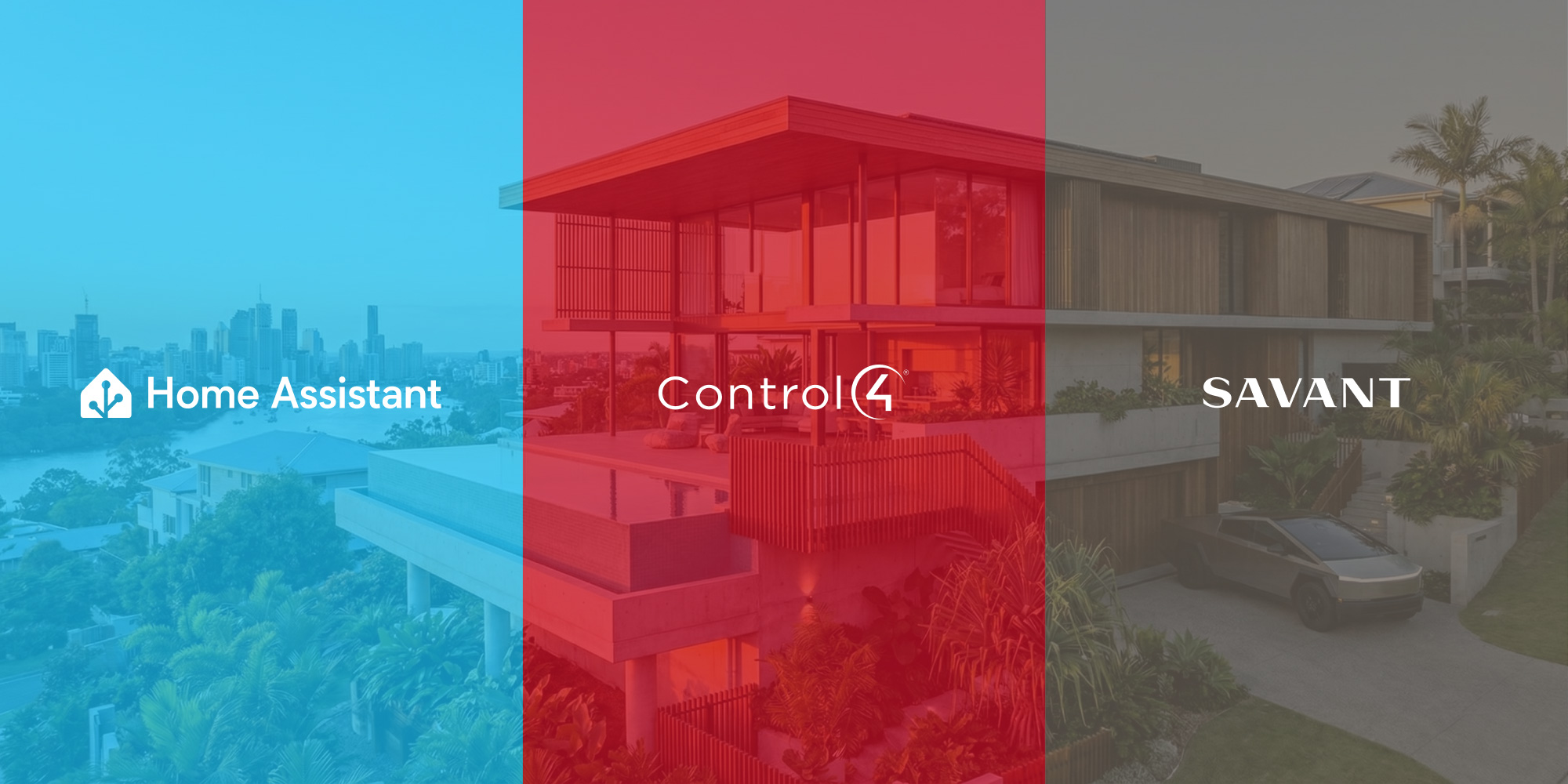
When homeowners start researching smart home systems, three names tend to surface again and again: Home Assistant, Control4, and Savant.
All three are capable platforms. All three can deliver impressive results when designed and installed properly. The difference lies not in whether they work, but in how they work, how much freedom they give you, and what the long-term trade-offs look like.
This comparison is not about declaring a winner. It is about understanding which approach aligns best with your home, your expectations, and your appetite for flexibility.
At a high level, Home Assistant represents an open automation platform, while Control4 and Savant are proprietary ecosystems.
That single difference shapes almost every other consideration.
Proprietary platforms are vertically controlled. Hardware compatibility, software updates, system access, and long-term support are governed by the manufacturer and their authorised dealer network.
Open platforms are horizontally flexible. They integrate across brands, protocols, and hardware generations, with no single vendor controlling the system end-to-end.
Neither approach is inherently bad. They simply solve different problems for different homeowners.
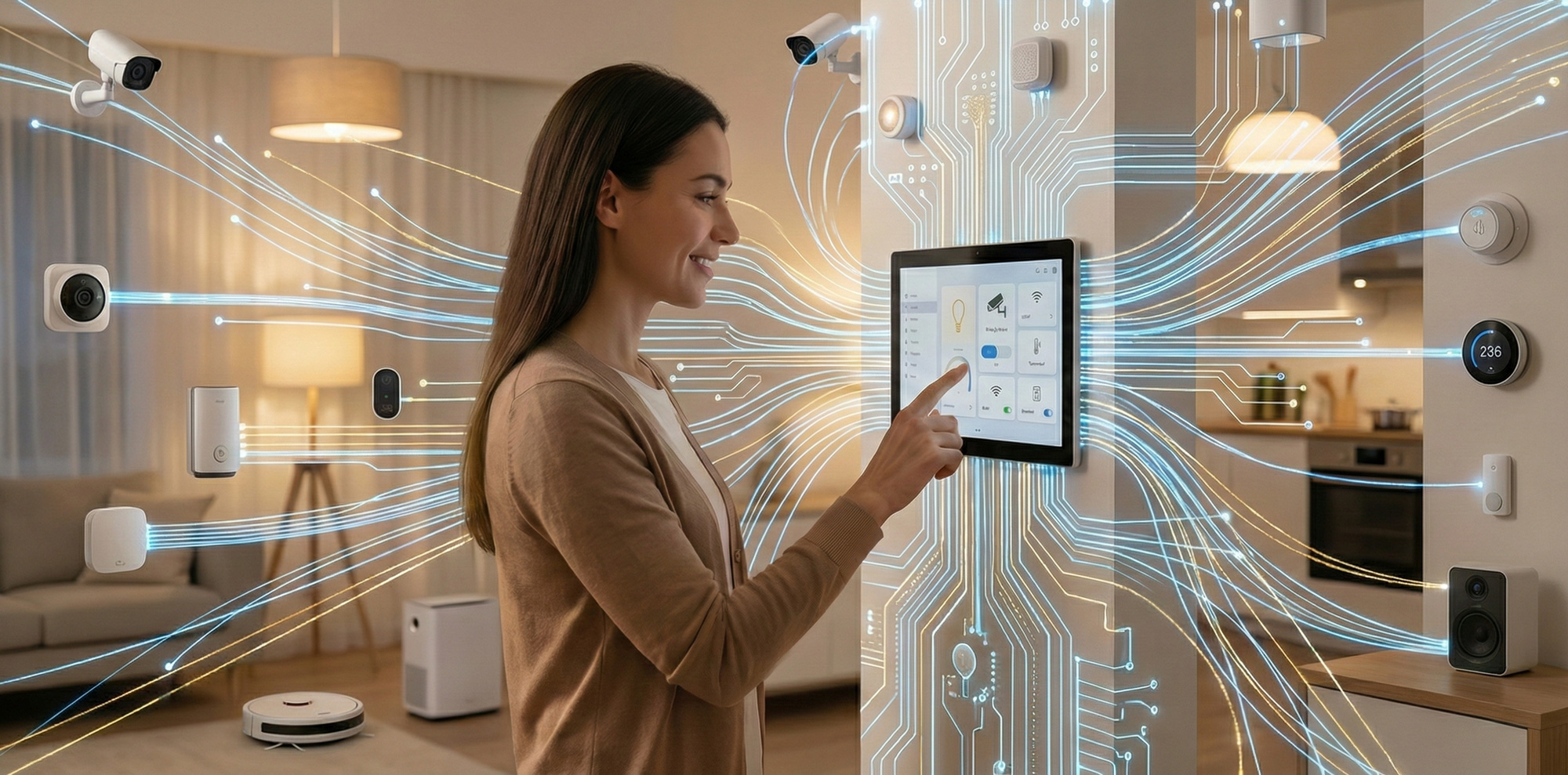
Home Assistant is an open-source automation platform used globally by engineers, system integrators, and technically disciplined homeowners.
Its strengths are clear:
This makes Home Assistant exceptionally powerful, but also unforgiving of poor design.
An open platform does not hide mistakes. Network weaknesses, rushed integrations, and poorly thought-out automations will surface quickly. When engineered properly, however, it delivers a level of control, transparency, and future-proofing that proprietary systems cannot match.
Home Assistant is best suited to homes where the system is treated as infrastructure, not a gadget collection.
Control4 and Savant sit at the premium end of the proprietary smart home market. They are commonly deployed by AV-focused integrators and are especially strong in media-centric environments.
Their advantages include:
For many homeowners, this feels reassuring. The system is curated, supported, and intentionally constrained.
The trade-off is flexibility.
Device compatibility is limited to approved ecosystems. Advanced automation logic is restricted. Ongoing licensing and dealer dependency are built into the model. Long-term changes often require returning to the original integrator.
These platforms work best when homeowners value simplicity and presentation over deep system customisation.
It is important to be clear about this: proprietary systems are not bad systems.
They are stable, mature, and professionally supported. For the right homeowner, they can be an excellent fit.
The limitation is not reliability, but optionality.
Once installed, you are committing to a specific ecosystem, a specific support model, and a specific cost structure. If your needs evolve beyond what that ecosystem supports, your options narrow quickly.
Understanding this upfront avoids frustration later.
The freedom of an open platform comes with responsibility.
Open systems require:
Without this discipline, flexibility turns into complexity.
With it, the system becomes calmer, simpler, and more resilient over time.
This is why open automation is not a DIY shortcut. It is an engineering choice.
There is no universal answer, but there is a right answer for each home.
The most important factor is not the platform itself, but how well it is designed, implemented, and supported over time.
Choosing between Home Assistant, Control4, and Savant should never feel like a sales decision. It should feel like an engineering decision.
An experienced, platform-agnostic consultant helps you evaluate:
With the right guidance, any of these platforms can deliver an excellent result. Without it, even the most expensive system can disappoint.
Smart homes fail more often from poor planning than from poor technology.
Whether you choose an open platform or a proprietary one, the goal is the same: one reliable system that works quietly in the background and adapts as your home changes.
The right platform is the one that supports that outcome for the long term, not just on day one.